EV vs. Gas: A Realistic 5-Year Cost Comparison
Electric cars are usually cheaper to fuel and simpler to maintain, but the up-front price, insurance and resale value can move the other way. Here's how to run the comparison honestly.
By Brett, Founder & Editor · Updated July 13, 2026 · 8 min read
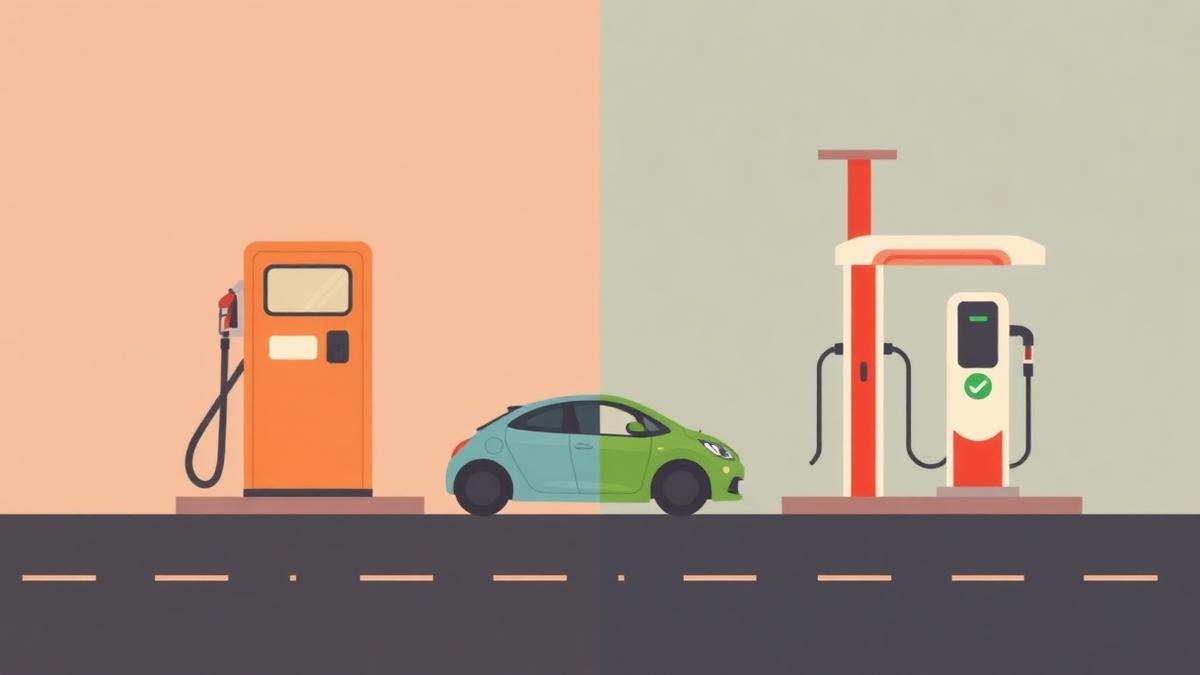
Most EV-versus-gas arguments compare a best-case EV (cheap overnight home charging) with a worst-case gas car (bad economy, expensive fuel). The honest comparison depends on three variables that are specific to you: where you charge, what your electricity actually costs, and how long you keep the car. Every number below is either arithmetic from inputs stated on the page, or a lookup at a public source listed at the end.
Up-front cost
Comparably equipped, an EV usually lists above its closest gas sibling, though the gap varies a lot by segment and changes as manufacturers reprice. Rather than quoting a spread that will be stale by the time you read it, price the two specific vehicles you are choosing between on the same day, out the door, including destination and fees — that is the only number that decides your purchase.
Federal clean-vehicle tax credit rules have changed repeatedly, including eligibility, income caps and whether a credit is available at all for a given purchase date. Do not budget around a credit you read about in an article: confirm current rules on the IRS clean vehicle credits page before you sign anything, and check your state and utility programs separately.
Fuel vs. electricity: do this one yourself
This is the bucket where the EV usually wins, and it is fully calculable. Get the EPA rating for each vehicle from fueleconomy.gov, your local gasoline price from the EIA fuel price update, and your electricity rate from your own utility bill (or your state average from the EIA Electric Power Monthly).
Notice what that shows: the EV's fuel advantage is not a property of the car, it is a property of your electricity price and where you plug in. At a cheap home rate it is a large annual saving; charged entirely in public at premium rates it can cost more than an efficient gas car. If you cannot charge at home, run these numbers before assuming you will save. The DOE's vehicle cost calculator will do the same comparison for two specific models.
Maintenance
The structural differences are real and not in dispute: an EV has no oil changes, no spark plugs, no timing belt and no conventional transmission service, and regenerative braking means friction brakes do less work and last longer. Against that, EVs are heavier and deliver torque instantly, so tyres wear faster, and EV-specific tyres are typically more expensive than the equivalent gas-car fitment.
For a dollar figure, price it rather than estimate it: take both vehicles' published maintenance schedules for the years you plan to own them, and get local quotes for the items that dominate — tyres, brakes and any high-mileage services.
Insurance
EVs frequently quote higher than a comparable gas model. The reasons are structural: repairs can be more expensive, packs are costly to replace, and fewer body shops are certified for the work, which also pushes more damaged vehicles past the total-loss threshold. But the size of the gap is carrier- and model-specific, so treat it as something to measure, not to assume: quote both vehicles with the same three carriers before you decide. See our insurance pricing guide for what drives the number.
Depreciation: the biggest variable
Resale value is where EV ownership economics are won or lost, and it is also the number most likely to be quoted badly. EV residuals have moved sharply in recent years as manufacturers cut prices, range improved quickly, and off-lease supply arrived — but the effect differs enormously between models, so a blanket percentage would be misleading.
Measure it instead. For each vehicle on your shortlist, compare today's new price with current asking prices for the same model three years old at similar mileage. Do that for the EV and the gas car side by side and you will have a defensible depreciation input for both — which is exactly what the calculator asks for.
The structural implication is worth stating plainly: whoever absorbs the early depreciation pays the largest single cost. That is why a two- or three-year-old EV, bought with most of the operating-cost advantage intact and inside its battery warranty, is frequently the strongest value in the comparison.
How to build your own 5-year comparison
Rather than publishing totals that pretend to describe your situation, here is the procedure — it takes about twenty minutes and produces numbers you can defend:
- Get an out-the-door price for each vehicle, on the same day.
- Estimate resale from real three-year-old listings of each model; the difference is your depreciation input.
- Calculate fuel and electricity from EPA ratings and your own local prices, as above.
- Get insurance quotes on both, from the same three carriers.
- Price the scheduled maintenance and the first set of tyres for each.
- Add your state's sales tax, fees and registration — including any EV-specific fee.
- Enter both into the calculator side by side and compare the totals, not the monthly payments.
Who an EV tends to suit
- You can charge at home overnight, ideally on an off-peak rate.
- Your daily driving fits comfortably inside the car's real-world range.
- You plan to keep the car long enough to amortise the early depreciation.
- Your electricity rate is low, or you generate your own.
Who is usually better off with gas or hybrid
- You rent, or park somewhere with no charging access.
- You tow regularly or routinely drive very long days.
- You change cars every two or three years, so you absorb only the steepest depreciation.
- You live where electricity is expensive relative to gasoline.
A hybrid is often the lowest-variance option: better fuel economy than a pure gas car with no charging infrastructure required, and resale behaviour that looks much like a conventional car. Compare the EPA ratings of the hybrid and the gas version on fueleconomy.gov and put both through the fuel arithmetic above.
The home-charging setup cost nobody mentions
A Level 2 home charger is the single biggest determinant of EV running costs, and it is a real first-year expense. What it costs you depends on facts about your house, not on an average: whether your panel has spare capacity, how far the run is from the panel to the parking space, whether your service needs upgrading, and what your local electrician charges. Get two written quotes before you buy the car, and check your utility's EV program — many offer equipment rebates or discounted overnight rates that change the arithmetic materially.
Whatever that install quote says, add it to the EV's first-year cost in the calculator. A large install can consume a couple of years of fuel savings before you are genuinely ahead.
Battery degradation and long-term value
Batteries lose some capacity over time, with heat and heavy DC fast charging generally accelerating it. Rather than a headline percentage, the practical protections are what matter: federal rules require EV manufacturers to warrant the traction battery for at least 8 years or 100,000 miles, and California's requirements are longer. That warranty transfers with the vehicle, which is why buying a used EV still inside its battery coverage is the single biggest risk-management move in the used EV market. Ask for a state-of-health readout before you buy — most EVs can produce one.
Cold weather and road trips
Range falls in cold weather, because battery chemistry is less efficient and cabin heating draws real power. For a commuter with home charging this is invisible; for someone who regularly drives long distances in winter it means additional charging stops. This is a lifestyle question rather than a spreadsheet question, but it belongs in the decision — and the honest way to test it is to map your two or three longest annual trips against real charger locations before you buy.
Incentives: check, don't assume
Federal, state and utility incentives change often, and eligibility can turn on assembly location, battery sourcing, vehicle price, purchase date and your income. Verify each one at the source — the IRS clean vehicle credits page for federal rules, your state energy or revenue department for state programs, and your utility's own site for charging rebates and off-peak rates. Never sign a deal whose maths only works if a credit applies until you have confirmed it applies to you.
Keep reading
The EV-versus-gas decision touches almost every cost bucket. For the connected picture, read how to measure depreciation for a specific model, the 5-year TCO framework applied to any car, and what actually drives your insurance premium.
Frequently asked questions
- Are EVs really cheaper to own than gas cars?
- It depends on three things you can check for yourself: where you charge, what you pay per kWh, and how long you keep the car. Cheap home charging over many years favours the EV; public fast charging and a short ownership window often erase the advantage.
- How do I calculate what it costs to charge an EV at home?
- Annual miles ÷ the car's miles per kWh × your electricity rate. Use the EPA efficiency rating from fueleconomy.gov and your own utility bill or the EIA's state residential rate.
- Do EVs cost more to insure?
- They often quote higher because pack-related repairs are expensive and fewer shops are certified to do them, but it varies by model and carrier. Get a quote on the exact vehicle rather than assuming a surcharge.
- Do EVs depreciate faster than gas cars?
- Resale values differ sharply by model and have moved quickly in recent years. Check it directly: compare today's new price with current asking prices for the same model three years old.
Sources & how we get our numbers
Figures below come from the public sources listed here. Worked examples are our own arithmetic from the inputs stated in the article — see our methodology.
- fueleconomy.gov (U.S. DOE / EPA) — official EPA MPG and kWh/100mi ratings for a specific year, make and model
- DOE Alternative Fuels Data Center — vehicle cost calculator — fuel and emissions comparison between specific EV and gas models
- U.S. Energy Information Administration — Gasoline and Diesel Fuel Update — current and historical retail gasoline prices, national and by region
- U.S. Energy Information Administration — Electric Power Monthly — average residential electricity price per kWh, by state
- IRS — Clean Vehicle Tax Credits — current eligibility rules, credit amounts and income caps
- Insurance Information Institute — Auto insurance basics — how coverages and rating factors work